
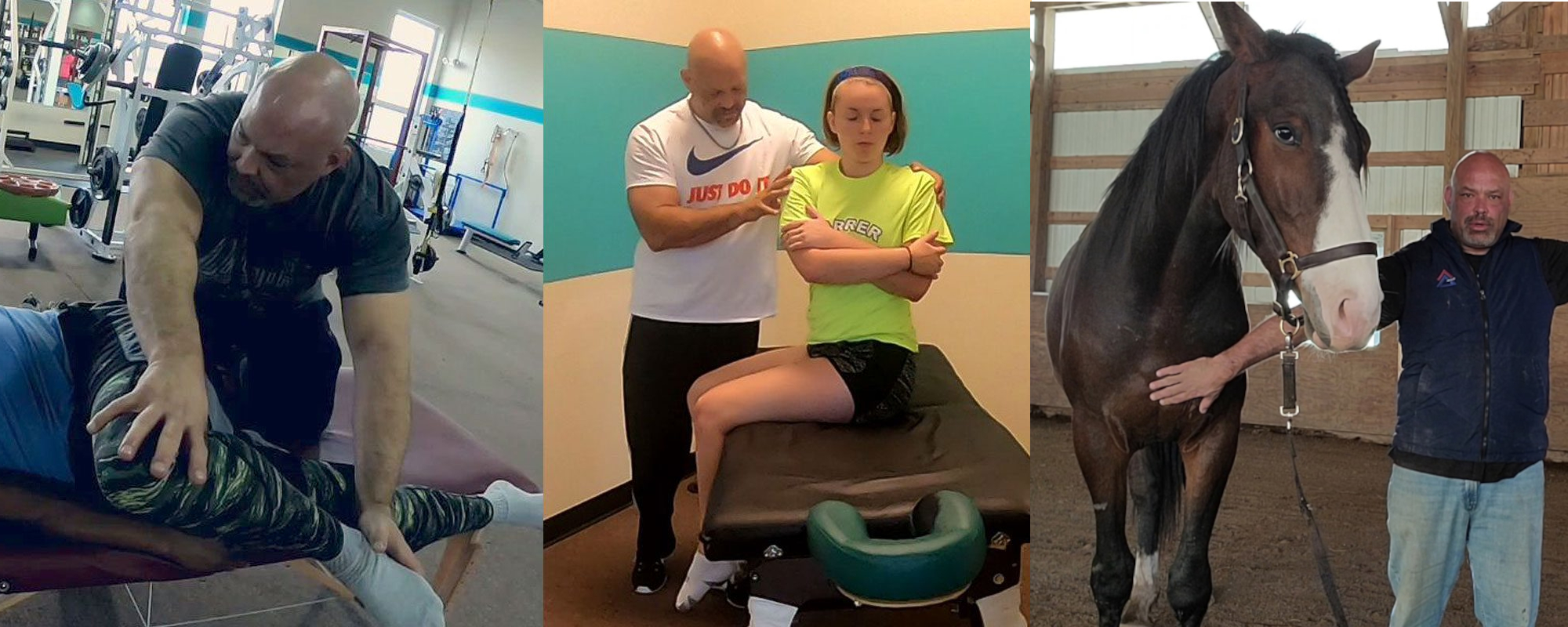
In the beginning of the video, the horse cannot engage his abdominals to flex the spine. In the end after treatment, he flexes just fine!
A horse’s dysfunctional motor pattern often originates not from its own limitations, but from the rider’s body—specifically, what the rider cannot do. This concept is rooted in the interdependence of horse and rider: the horse, a highly adaptive and sensitive animal, constantly responds to the rider’s weight, posture, tension, balance, and asymmetries. If the rider has habitual patterns of restriction, imbalance, or compensation, the horse will often mirror or adapt to them—leading to dysfunction in the horse’s own movement.
How the Rider’s Limitations Cause the Horse to Compensate
Asymmetrical weight distribution
If a rider sits heavier on one seat bone or collapses through one side of the torso, the horse must carry more weight on the corresponding limb and shift its balance to compensate. Over time, this creates uneven development in the horse’s musculature.
Stiffness or lack of mobility in the rider’s hips or spine
A rider who cannot follow the motion of the horse’s back with a supple pelvis or who holds tension in their body disrupts the horse’s natural rhythm. The horse may brace its back in response, shorten its stride, or lose the ability to track up with its hind legs.
Poor rein contact or inconsistent cues
A rider who lacks feel or clarity in the hands can inadvertently create confusion or defensive patterns in the horse’s mouth, poll, and neck. This often leads to a tight, overbent, or hollow outline, which cascades into dysfunction throughout the rest of the body.
Mental/emotional tension in the rider
Horses are highly attuned to the emotional states of their riders. A rider with fear, anxiety, or tension can transmit this to the horse, leading to guarded, reactive, or restricted movement.
Physical Effects of Dysfunctional Motor Patterns in the Horse
Muscles
- Asymmetrical development: Over-development of some muscle groups andatrophy of others (e.g., one-sided glute or shoulder development).
- Tension and tightness: Especially in the back, shoulders, poll, and neck due to bracing against the rider.
- Fascial restrictions: Chronic patterns create thickened, less elastic fascia that inhibits range of motion.
Nerves
- Impingement: Compensatory posture can compress nerves, particularly near the withers, shoulders, or sacrum, resulting in pain, numbness, or altered proprioception.
- Hyper-reactivity: Constant guarding can sensitize nerve endings, making the horse more reactive to touch or cues.
Joints
- Uneven wear: Unequal loading of joints, especially in the hocks, stifles, and frontlegs, can lead to premature arthritis or inflammation.
- Restricted range of motion: Especially in the thoracic spine and pelvis, which limits the ability to engage the hind end.
Functional Effects on Movement and Gait
- Shortened stride: The horse may avoid using its full range of motion, especially inthe hind limbs, leading to a flat or choppy gait.
- Loss of straightness: Difficulty maintaining a straight line, falling in or out on turns,or “drifting” in a direction.
- Disunited gaits or poor transitions: Particularly noticeable in canter or when askingfor collected movements
- Bracing or hollowing: The back and topline disconnect, leading to tension and resistance rather than fluid, swinging movement.
- Compensatory lameness: Over time, compensation patterns can develop into apparent or subtle lameness, often without a clear acute injury.
Summary
The horse is a mirror. When a rider lacks balance, mobility, or emotional clarity, the horse will adapt, often at great cost to its own biomechanical efficiency and comfort. These compensations, though often subtle at first, can cascade into muscular imbalance, joint stress, neurological irritation, and degraded movement quality. To restore functional movement, it’s crucial to address not only the horse’s body but also the rider’s patterns— because often, the horse is simply doing what the rider cannot.
How can a neurokinetic therapist correct the dysfunctional motor pattern and help the rider and the horse better function as one unit?
A NeuroKinetic Therapy® (NKT) practitioner plays a vital role in resolving dysfunctional motor patterns in both the horse and rider, addressing the deep neurological imbalances that underlie compensatory movement. Because NKT focuses on the brain’s motor control center—the “software” governing muscular coordination—it allows both rider and horse to restore optimal, efficient movement at its source.
When applied thoughtfully, NKT helps the rider and horse function as one integrated, balanced unit, by identifying and correcting what is overworking and what is underperforming in their unique relationship.
How NKT Helps Correct Dysfunctional Motor Patterns
1. Assessment of Compensations
NKT doesn’t just look at where the tension or pain is—it asks why it’s there. The practitioner uses manual muscle testing and movement assessment to identify:
- Inhibited (weak) muscles that aren’t doing their job.
- Facilitated (overworking) muscles that compensate for the weak ones.
- Patterns of tension or collapse that result from this imbalance.
In the rider:
Common compensations may involve core instability, pelvic torsion, a locked shoulder, or poor hip mobility. A weak left glute might lead to overuse of the right back or hip flexor, which then pushes the horse off balance.

Rider: Collapsed on the left. Right leg is overworking.
In the horse:
The horse’s motor control system mirrors or adapts to the rider’s imbalance. For instance, if the rider collapses on the left, the horse may shift its center of mass right, overloading one front limb and creating a lateral compensation.
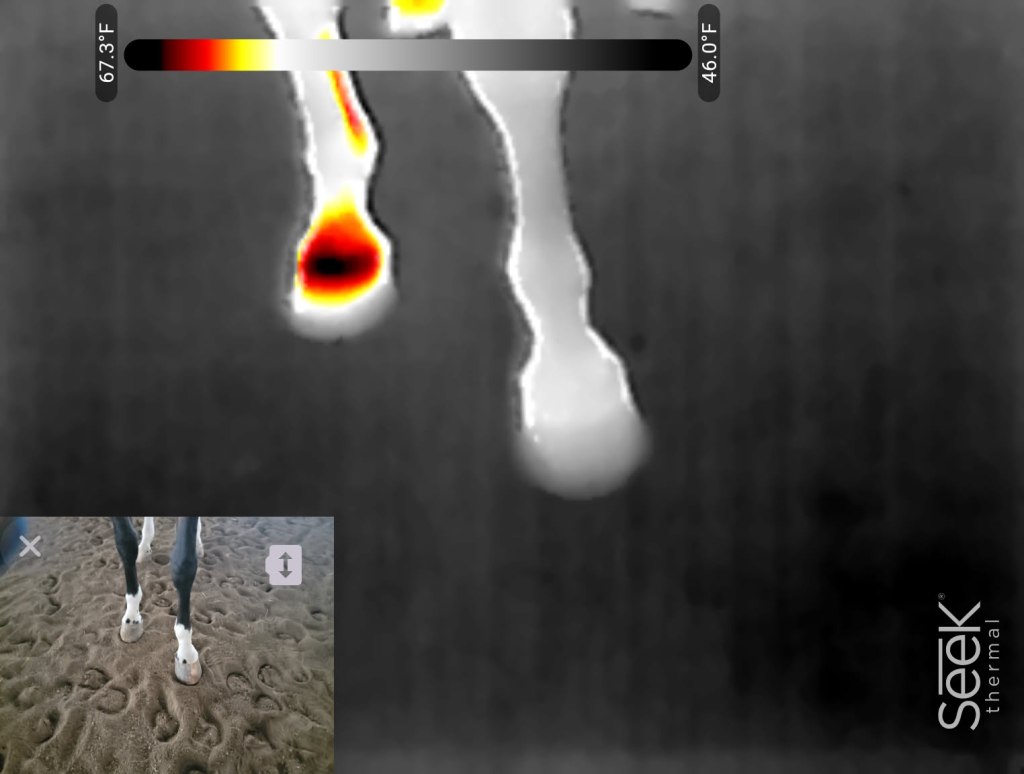
Thermal image indicating pain in the front forelimb
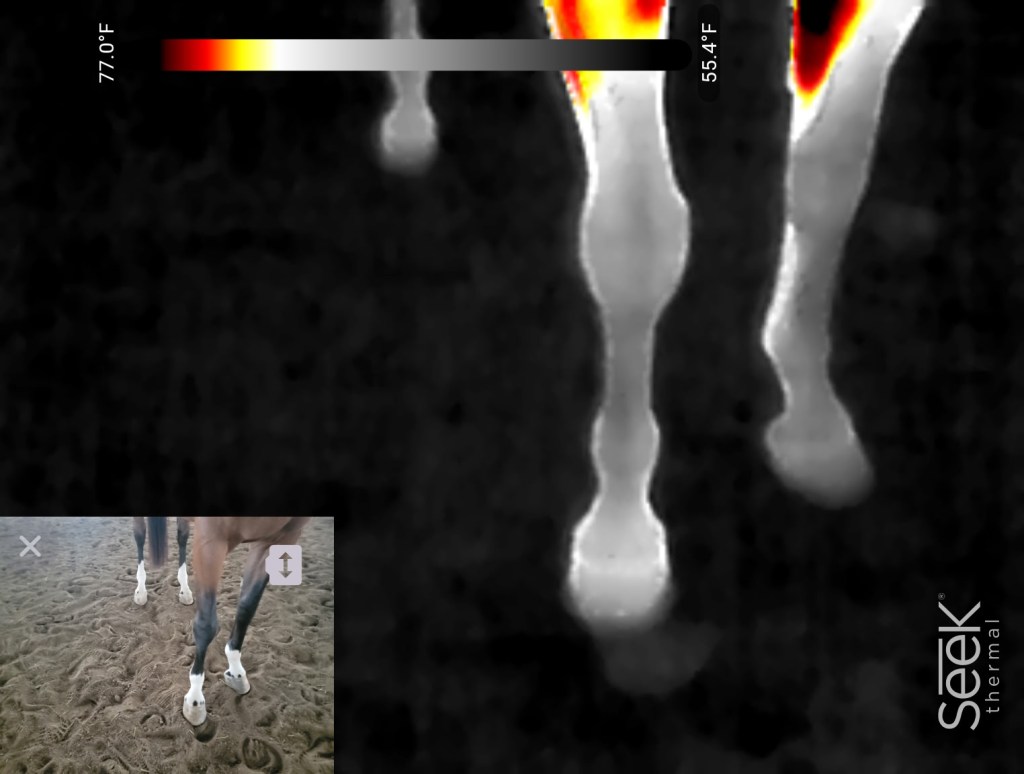
After NKT
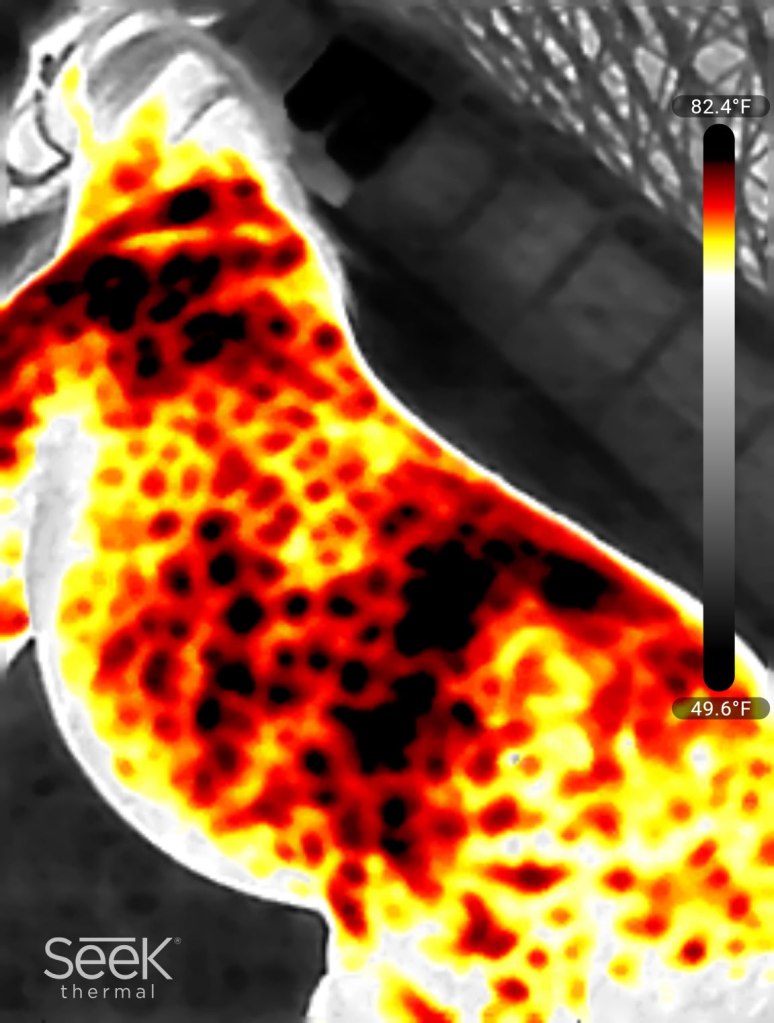
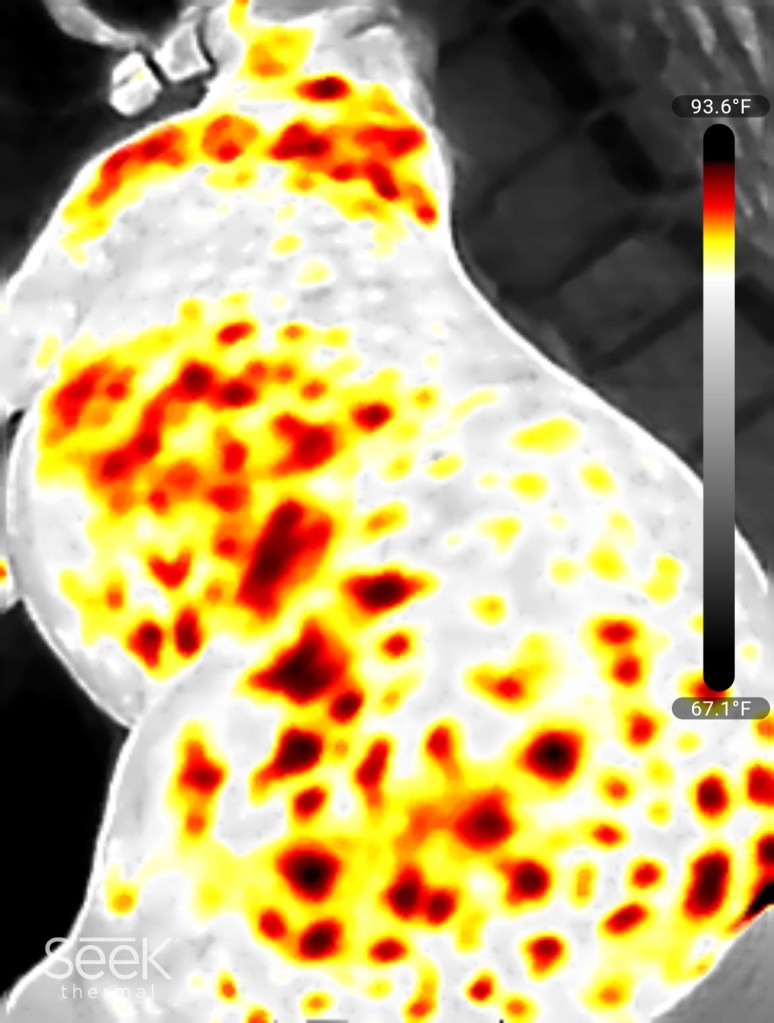
Left side of horse before NKT
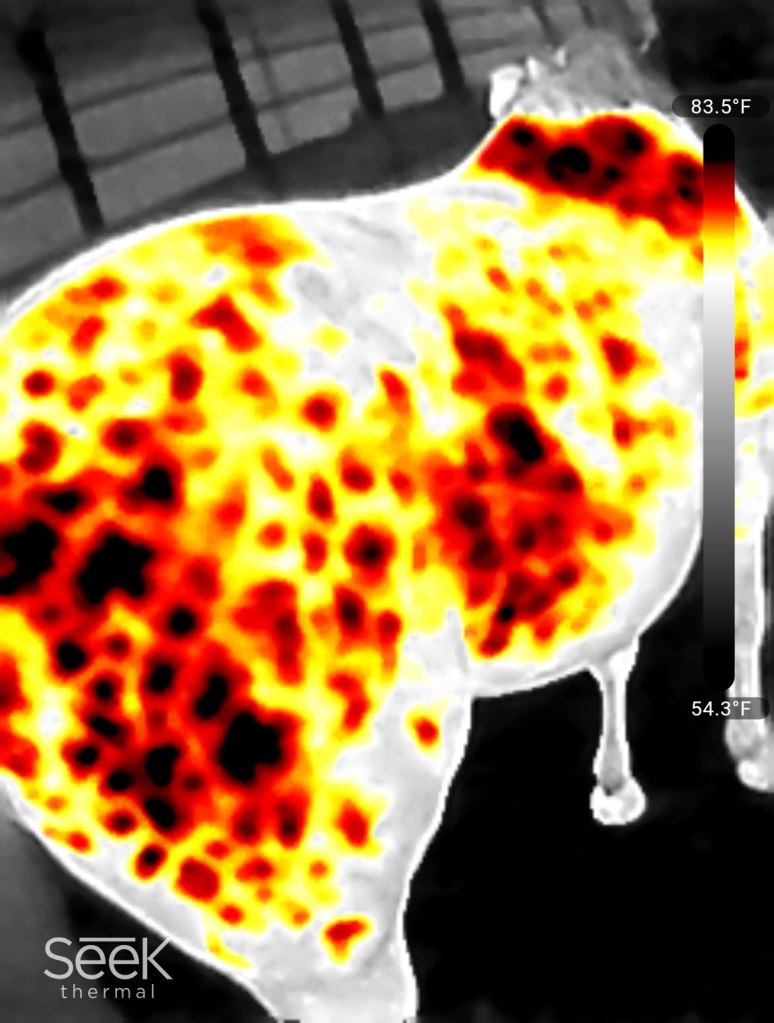
Left side of horse after NKT
Right side of horse before NKT

Right side of horse after NKT
2. Corrective Re-patterning
After identifying the faulty pattern, the practitioner uses:
- Manual stimulation of the inhibited muscle (to “wake it up”).
- Neurological cueing (such as pressure, light movement, or breath work) to reinforce activation.
- Re-testing to confirm that the new pattern is being accepted neurologically.
The result?
The brain begins to “overwrite” the old pattern and reestablish proper sequencing. For riders, this might mean activating deep core stabilizers, spinal erectors, or glute medius to restore a neutral pelvis and allow full seat bone engagement. For horses, NKT can help release facilitated neck or shoulder muscles while waking up deep postural stabilizers like the multifidus or core sling system.
3. Integration Into Movement
The most powerful part of NKT is what comes next: functional integration. Once the corrected pattern is neurologically accepted, it must be reinforced through movement.
- The rider practices new postural or movement habits—e.g., a rebalanced pelvis, breath-driven motion, or a grounded leg position.
- The horse, once freed from compensation, can begin using its body correctly again—engaging the core, lifting through the withers, stepping under with the hindquarters.
This may involve:
- Groundwork for the horse (long-lining, lunging with mindful biomechanics).• Mounted practice for the rider with awareness of their new muscle activation.
- Paired sessions (horse and rider), allowing both systems to synchronize and evolve together.
Horse–Rider Co-regulation: Rebuilding the Unit
When rider and horse undergo NKT-informed rehab together, profound things happen:
- The rider becomes more symmetrical, soft, and stable, allowing clear communication through the seat and aids.
- The horse no longer needs to brace or protect, leading to relaxation, longer strides, and improved rhythm.
- A new motor partnership is formed: one that is based on mutual ease, function, and clarity.
Example Case: Pelvic Twist in Rider → Forelimb Overload in Horse
Issue: Rider has a left pelvic rotation causing a collapse on the left side. Horse starts tracking crooked, overloading the right forelimb, and shortening the left hind.
NKT Protocol:
- Test and correct inhibited obliques and glutes in the rider.
- Release overworking QL and adductors.
- On the horse: release tension in right brachiocephalicus and pectorals, activate leftmultifidus and longissimus.
- Reinforce new pattern through in-hand lateral work and mindful, centered riding.
Result: Horse’s gait becomes symmetrical, rider feels level and connected, communication improves dramatically.
Final Thought
A NeuroKinetic Therapist doesn’t just “fix a body”—they reprogram a partnership. By resolving dysfunctional motor patterns in both horse and rider, they help them move beyond compensation and into authentic, functional harmony. It’s not just about biomechanics—it’s about neuro-biomechanical relationship repair.
 pivotalnkt.com